🔥 Introduction
If your website is not ranking on Google…
👉 The problem is often On-Page SEO
Many people think SEO is only about backlinks…
But the truth is:
👉 On-page SEO is the foundation of ranking
If your page is not properly optimized:
- Google can’t understand it
- Users don’t stay on it
- Your ranking drops
In 2026, SEO is not about tricks…
👉 It’s about structure + clarity + user experience
This guide will give you a complete checklist you can follow step-by-step.
🚀 1. Start with Keyword Research
Before writing anything…
👉 Choose the right keyword
What to check:
- Search volume
- Competition
- Search intent
💡 Example:
Instead of:
👉 “SEO”
Use:
👉 “on-page SEO checklist for beginners”
👉 Targeting specific keywords improves your chances of ranking
🚀 2. Optimize Your Title Tag (MOST IMPORTANT)
Your title is the first thing users see on Google.
Best practices:
- Keep it under 60 characters
- Add main keyword at the beginning
- Make it clickable
💡 Example:
👉 “On-Page SEO Checklist (2026) – Step-by-Step Guide”
👉 Title tag is one of the strongest ranking factors
🚀 3. Write a Powerful Meta Description
This is like your ad on Google
Tips:
- 150–160 characters
- Include keyword
- Add call-to-action
👉 It improves click rate even if it doesn’t directly affect ranking
🚀 4. Use Proper Heading Structure (H1, H2, H3)
Headings help both:
- Google understand your content
- Users read easily
Structure:
- 1 H1 (main title)
- H2 for sections
- H3 for sub-points
👉 Clear structure improves readability and SEO
🚀 5. Create High-Quality Content (Game Changer)
Content is still the #1 ranking factor.
Your content should:
- Solve user problem
- Be easy to read
- Include examples
- Be detailed
👉 Google now prefers helpful and original content over keyword stuffing
💡 Simple Rule:
👉 Write for humans, not search engines
🚀 6. Optimize URL Structure
Your URL should be clean and simple.
Good example:
👉 yourwebsite.com/on-page-seo-checklist
Avoid:
👉 yourwebsite.com/page?id=123
👉 Short, keyword-based URLs improve SEO and user experience
🚀 7. Place Keywords Naturally
Don’t overuse keywords…
👉 Place them smartly
Add keyword in:
- Title
- First paragraph
- Headings
- URL
- Image alt text
👉 Natural placement works better than stuffing
🚀 8. Optimize Images (Hidden SEO Boost)
Images are important for SEO too.
What to do:
- Use small file size
- Add alt text
- Use proper names
👉 Image optimization improves speed and ranking
🚀 9. Improve Page Speed (Very Important)
If your site is slow…
👉 Users leave → ranking drops
Improve speed:
- Compress images
- Use fast hosting
- Minimize code
👉 Speed is a key ranking factor in modern SEO
🚀 10. Make Website Mobile-Friendly
Most users are on mobile now.
👉 Your site should:
- Load fast
- Be responsive
- Easy to navigate
👉 Mobile experience directly affects rankings
🚀 11. Internal Linking (Very Powerful)
Link your pages together.
Example:
- SEO blog → AI blog
- Blog → service page
👉 Internal linking improves ranking and site structure
🚀 12. Use Schema Markup (Advanced)
Schema helps Google understand your content better.
Examples:
- FAQ schema
- Article schema
- Product schema
👉 It can improve visibility in search results
🚀 13. Focus on User Experience (UX)
SEO is not just technical…
👉 It’s about users
Improve:
- Readability
- Layout
- Navigation
👉 Better UX = better rankings
🚀 14. Update Content Regularly
Old content loses ranking.
Update:
- Add new info
- Improve structure
- Fix outdated points
👉 Fresh content performs better on Google
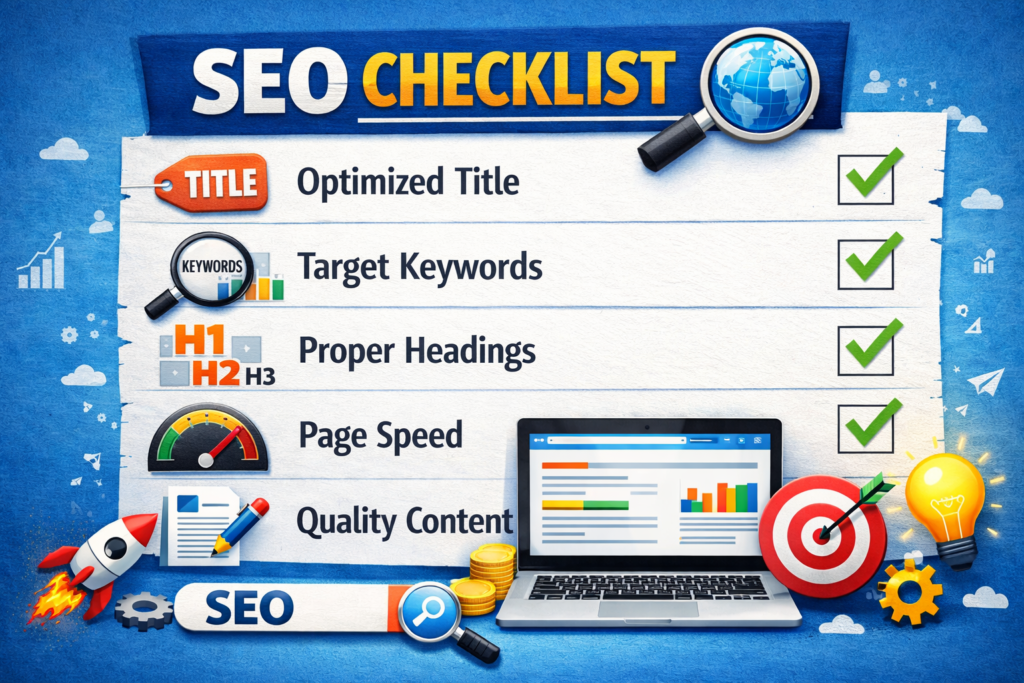
🔥 Simple On-Page SEO Checklist (Quick Summary)
✔ Keyword research
✔ Title optimization
✔ Meta description
✔ Proper headings
✔ High-quality content
✔ Clean URL
✔ Image optimization
✔ Page speed
✔ Mobile-friendly
✔ Internal linking
🧠 Real Insight (From SEO Community)
From real SEO discussions:
“If content doesn’t match intent, nothing else matters”
👉 This shows that search intent is the most important factor today
❌ Common Mistakes to Avoid
- Keyword stuffing
- Copy content
- Ignoring mobile users
- No internal linking
- Poor content quality
📈 Final Thoughts
On-page SEO is not complicated…
👉 It just needs the right steps
If you follow this checklist:
- Your pages will rank better
- Your traffic will increase
- Your website will grow
👉 Focus on quality + consistency
Frequently Asked Questions
1. What is on-page SEO?
On-page SEO means optimizing your website content, structure, and elements like title, headings, and images to improve ranking.
2. Is on-page SEO enough to rank?
On-page SEO is the foundation. Combined with good content and some backlinks, it can help your website rank higher.
3. How long does on-page SEO take to work?
It usually takes a few weeks to months depending on competition and consistency.
4. What is the most important on-page SEO factor?
Content quality and search intent are the most important factors.
5. Can beginners do on-page SEO?
Yes, beginners can easily learn and apply on-page SEO by following a checklist like this.